
Posted on January 28, 2024
The Decoy Effect
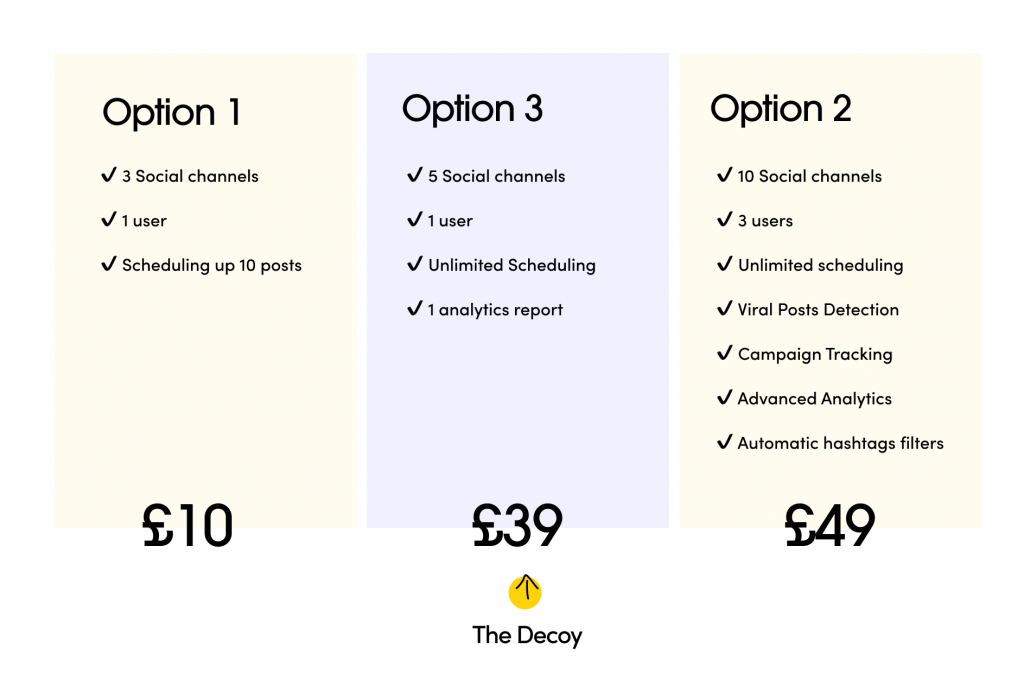
he Decoy Effect is the phenomenon whereby adding a third pricing option makes the consumer change their preference towards an option the seller is trying to promote. The “decoy” is priced to make one of the other options much more attractive.
It’s also called “asymmetric dominance effect”.
This is what you usually experience when you buy popcorn at the cinema or latte at Starbucks. The price difference between Medium and Large sizes is so little that you’d automatically opt-in for the larger option, unless you’re choosing the Small one for a specific reason (e.g. you like your coffee less milky)

The Decoy Effect is a cognitive bias that’s often used when working on a pricing strategy, but also in politics, finance, insurance and pension plans, PR, and other areas. It almost always works, but the catch is – can you execute it smart enough so it attracts customers and still pushes your economics north.
Read More
Posted on January 23, 2024
Central Vancouver Public Library
Today I’m visiting Central Vancouver public library.
it’s beautiful here.



Posted on January 21, 2024
SYSTEMS THINKING: WHAT, WHY, WHEN, WHERE, AND HOW?
What Does Systems Thinking Involve?
It’s important to remember that the term “systems thinking” can mean different things to different people. The discipline of systems thinking is more than just a collection of tools and methods – it’s also an underlying philosophy. Many beginners are attracted to the tools, such as causal loop diagrams and management flight simulators, in hopes that these tools will help them deal with persistent business problems. But systems thinking is also a sensitivity to the circular nature of the world we live in; an awareness of the role of structure in creating the conditions we face; a recognition that there are powerful laws of systems operating that we are unaware of; a realization that there are consequences to our actions that we are oblivious to.
Systems thinking is also a diagnostic tool. As in the medical field, effective treatment follows thorough diagnosis. In this sense, systems thinking is a disciplined approach for examining problems more completely and accurately before acting. It allows us to ask better questions before jumping to conclusions.
Systems thinking often involves moving from observing events or data, to identifying patterns of behavior overtime, to surfacing the underlying structures that drive those events and patterns. By understanding and changing structures that are not serving us well (including our mental models and perceptions), we can expand the choices available to us and create more satisfying, long-term solutions to chronic problems.
In general, a systems thinking perspective requires curiosity, clarity, compassion, choice, and courage. This approach includes the willingness to see a situation more fully, to recognize that we are interrelated, to acknowledge that there are often multiple interventions to a problem, and to champion interventions that may not be popular (see “The Systems Orientation: From Curiosity to Courage,”V5N9).
Posted on January 21, 2024
What Is Competency Development? (With Core Competencies)
When applying for a role or looking to advance as a professional, learning about the competencies an employer uses to determine your suitability can improve your chances of success. You can develop these skills to demonstrate that you’re the best candidate for a particular position. Understanding the core competency requirements to succeed in a specific role can help your professional development and support a company in meeting its strategic goals. In this article, we define competency development and provide a list of core competencies that can help you succeed as a professional.
Read More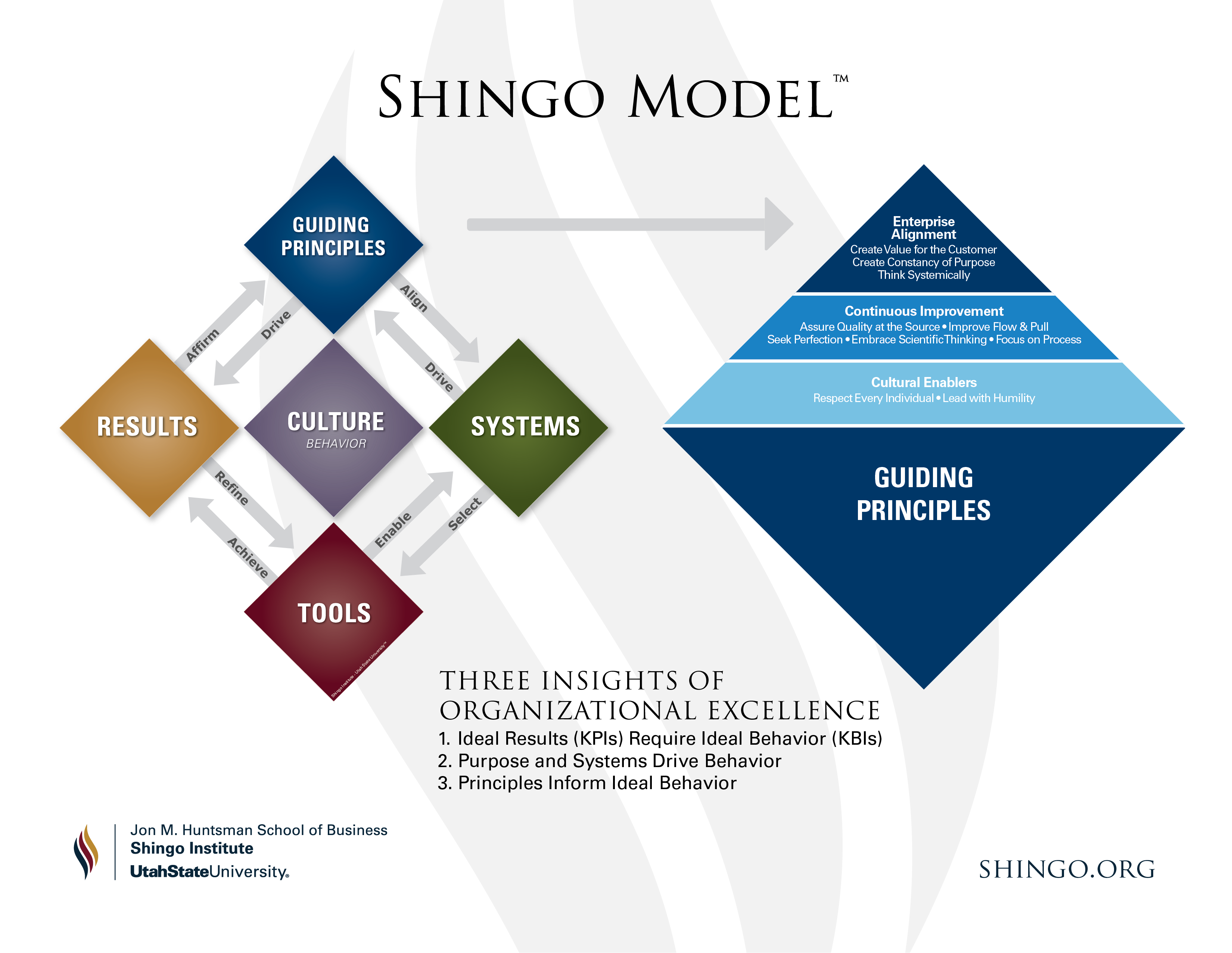
Posted on January 21, 2024
Shingo Model
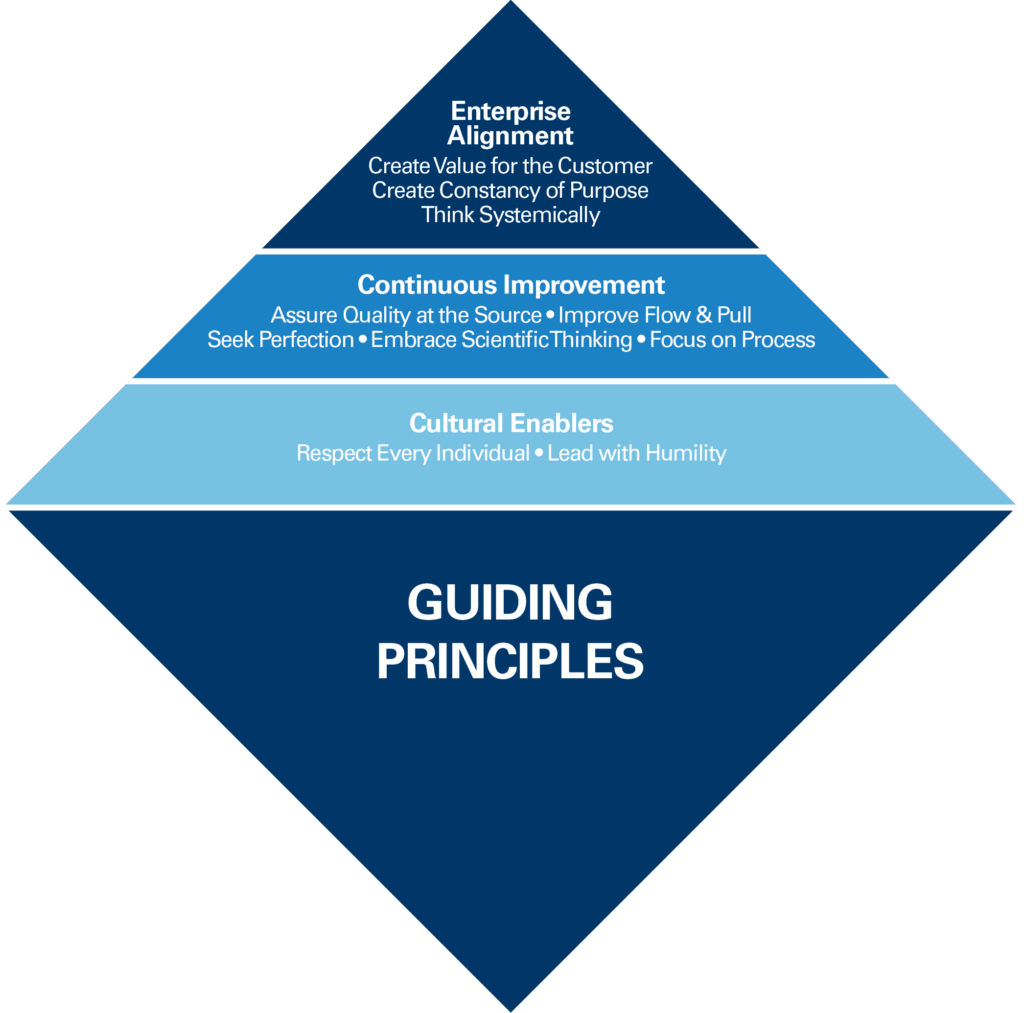
The Shingo Guiding Principles are the basis for building a sustainable culture of organizational excellence. In the Guiding Principles diamond, the principles are divided into three dimensions: Cultural Enablers, Continuous Improvement, and Enterprise Alignment.
Tools
Systems
Results
Culture
Shingo Guiding Principles
Respect Every Individual
Lead with Humility
Seek Perfection
Embrace Scientific Thinking
Focus on Process
Assure Quality at the Source
Improve Flow & Pull
Think Systemically
Create Constancy of Purpose
Create Value for the Customer
The Shingo Model Booklet
Posted on January 21, 2024
What is Operational Excellence (OpEx)? and how does it help you strive for continuous improvement in a complex business environment?
Improving a business is about more than just increasing efficiencies or maximizing ROI. Today’s global economy also requires the flexibility to adjust to changing markets, conditions and technologies. Operational excellence is a way for organizations to create a roadmap toward continuous improvement in a complex business environment.
Its goal is to give companies a competitive advantage. If done right, operational excellence helps business leaders make better decisions and employees show continuous improvement. Companies that are better at problem-solving and process improvement, the theory goes, will ultimately exceed their competition in profitability.
Here, we’ll explore the core principles of operational excellence and how companies are using technology to implement these methodologies.
Read MorePosted on January 20, 2024
Welcome to the NetherLand: The Headquarters of High-Agency Geeking
Welcome to my subterranean intellectual headquarters … “THE NetherLand“
If you’re wondering what this space is, you’ve arrived at the intersection of deep-dive technical research, business architecture, and the raw curiosity of DIY engineering. This is a sanctuary for the “High-Agency Geek”—those who aren’t afraid to get their hands dirty in the code, the boardroom, or the workshop.
Read More
Posted on January 20, 2024
19 Different team Management Styles
Have you ever wonder why working is some departments or teams are so fun and in others it can be rough?
It can depend on the Management style.
we have different approaches and styles in managing teams and projects and each one has their own pros and cons.
Let’s dig into them.
Posted on January 19, 2024
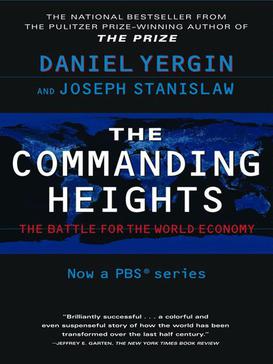
Commanding Heights: The Battle for the World Economy
I suggest to watch this 6 hour documentary. I loved it.
“Commanding Heights: The Battle for the World Economy is a six-hour documentary that originally aired on PBS in 2002. It is based on the best selling book of the same name by Pulitzer-prize winning author Daniel Yergin.”
Posted on January 19, 2024
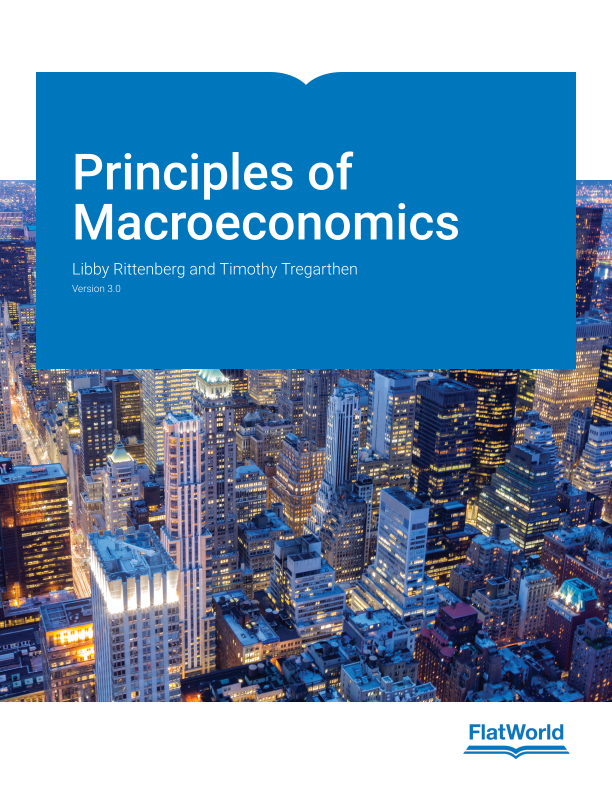
Principles of Macroeconomics, By Libby Rittenberg and Timothy Tregarthen.
Let’s start with Principles of Macroeconomics, By Libby Rittenberg and Timothy Tregarthen.
This is our textbook for Macroeconomics and while I read it I feel so immersed by its subjects.
Macro Economics. what an interesting topic for me.
“In this book, the authors explore the effects of political uncertainty. The authors explore how political outcomes of events, such as Brexit and the election of Donald Trump, affect economic policies and economic outcomes. Throughout the last decade, economists have received the public’s attention, and the authors saw an opportunity to share economic principles and thinking in a way that emphasizes their relevance in today’s world.”
#RezasLibrary
#book
#textbook
#macroeconomics
#Libby_Rittenberg
#Timothy_Tregarthen
#business
#businessdevelopment
#businessplanning
#businessstrategy